
Imagine a librarian with ten thousand books and no labels on any of them. Someone walks in asking for a recipe book. The librarian has no idea where to start. That is exactly what Google faces when a blog post has no keywords. Keywords are the labels. They tell Google what your content is about, who it is for, and why it deserves to show up when someone types a question into the search bar. So if you’re a beginner or a writer who wants to switch to writing SEO content, understanding why keywords are important in SEO writing isn’t optional.
Mastering it is the difference between writing a blog post that ranks and one that sits in silence at position sixty. Well, except you want to play in the small waters and remain a mediocre SEO writer with an invisible blog. This may be your first time reading about keyword importance in SEO writing; now stay put and let’s take a ride together.
Why keywords are important in SEO writing and blogging
Keywords are not just words scattered across a page for the purpose of writing. I prefer calling them signals because, when you type a keyword into your article, you are sending Google a message. You are saying something like: “Hey, Google, this content answers this specific question.” Google then reads those signals and decides whether your page deserves to appear in front of the person asking that question.
Also, think of it this way: A nutritionist writes a blog post about gut health but never uses the phrase “gut health” anywhere in the article. She goes on to talk around the topic beautifully but gives Google nothing concrete to grab onto. Guess what will happen? Of course, her blog post would stay buried.
However, the moment she intentionally places keywords in the right places, Google begins to understand her content and rewards it with visibility. Another thing worth knowing is that keywords do not just attract Google bots; they attract the right readers to your blog. Your well-placed keyword pulls in someone who is actively searching for exactly what you have published on your blog. The beauty of that kind of traffic is that it stays on your page longer, lowers your bounce rate, and signals to Google that your content is valuable.
I plan to make this blog post as explanatory as possible, so I will explain further how these keywords help your published blog posts show up on Google.
How do keywords help a blog post rank on Google?
Google’s entire job as a search engine is to match a searcher’s question with the most relevant answer available. Keywords are how it finds answers for people looking for them and how it makes that match. When your blog post uses the same language your target audience uses to search, Google sees your content as a strong match and pushes it higher in the results so that your target audience can find you.
However, it goes deeper than that because Google no longer just matches exact words only. It now understands context, meaning, and intent behind a search. This is why placing related keywords and natural variations throughout your content strengthens your chances of ranking.
Let me give you a relatable example: if you are in the skincare niche and write a blog post about skincare routines and include terms like “morning skincare steps,” “hydration tips,” “SPF for daily use,” and the like, it signals depth and relevance to Google, even if those were not the primary keyword.
Therefore, as an SEO writer, this means your job is not to stuff a primary keyword into every sentence. Your job is to write content so thoroughly that the keyword and its related terms appear naturally; this way, you will cover the topic completely while helping your post send signals to Google.
Get your pen and jotter ready to write down specific places on your blog post where your keyword must appear for Google to unmistakably find it.
Where should you place keywords in a blog post?
Keep this in mind: Google scans specific areas of your content first. Hence, getting your keyword in the right spots gives your post that serious ranking advantage.
To begin with, your primary keyword belongs in your title first. Your keyword and title must be mixed into one. That means you can’t use just your keywords as the title of your blog post. Likewise, you can’t get a title that is devoid of your keywords.
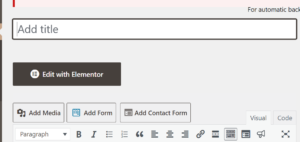
Secondly, place it in the first paragraph, ideally in the first two sentences. Keep it close to the start. But if you can’t be creative enough to attach it naturally at the beginning, ensure you find a place for it in the very first paragraph of your blog post. It is easier that way.
Thirdly, use it in at least one H2 subheading. I usually don’t preach one H2 subheading because it is never enough for long-form content. I usually recommend at least three, four, or even more depending on the length of your article.
Fourthly, sprinkle it naturally two to three more times across the body of the post. Again, the number of times depends on the length of your blog post. And while at it, interchange it with other supporting keywords.
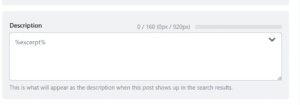
Fifth, place it in your meta description. This section is non-negotiable if you wish your blog post to have a fighting chance for the SERP results. To add to this information, you have to count your words because the Meta description box can only carry a certain number of words.
Lastly, add it to your image alt text. The secret here is that your blog post may not rank as you wish, but your image will sit pretty on Google SERPs because you optimized it with the keywords.
That is the structure, and you don’t need to overthink it. You don’t need to mention your main keyword seventeen times but only where it counts. Then, write genuinely helpful content, and let the depth of your knowledge carry the rest.
Can wrong keyword usage hurt your blog rankings?
Two mistakes can cause the most damage for your blog posts if you’re not careful. The first is keyword stuffing. This happens when you force a keyword into a blog post so many times that the content reads unnaturally. Google will not just penalize your blog; readers feel it immediately and leave. And when readers bounce off like that, it causes a high bounce rate, which tells Google that your content did not satisfy the searcher. Sadly, your ranking drops further down.
The second mistake is targeting the wrong keyword entirely in your blog post. You might write a brilliant blog post but target a keyword with a difficulty score of 80 as a new blog owner. No matter how good the content is, a new blog simply cannot outrank sites with years of authority and thousands of backlinks behind them. Therefore, choosing a keyword your site can realistically rank for is just as important as writing the content well.
To crown it all up, every word you choose to target is a decision about who sees your content, when they see it, and whether your blog will grow or stall. That is why keywords are important in SEO writing. And beside writing excellently, staying SEO-savvy is one way you grow your blog and monetize it.