
You are not just a writer anymore. The moment you understand content optimization for SEO, you become the writer every serious blogger, business owner, and digital brand is desperately looking for and willing to pay significantly more to hire. Most content writers deliver words. An SEO-optimized content writer delivers traffic, and traffic is what every client with money is interested in buying.
This post gives you the exact optimization process that triples blog post traffic and positions you as the kind of writer who commands premium rates because your work produces results clients can see in their analytics.
Before we fully dive in, I want you to perfectly understand what content optimization for SEO is and why it matters.
What is content optimization for SEO and why does it change everything for writers?
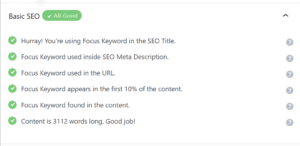
Content optimization for SEO, as seen in the picture above, is the strategic process of improving blog posts (first measured with an SEO plugin) so they rank higher in Google, earn more clicks, keep readers engaged longer, and ultimately drive consistent organic traffic without paid advertising. It covers keyword placement, title tags, meta descriptions, internal linking, readability, image optimization, and content freshness, working together as one unified system.
For bloggers, it means your posts finally get the audience they deserve. For freelance writers, it means something even more valuable: it transforms you from a commodity writer charging per word into a results-driven content strategist charging per outcome.
What is the difference between a writer who gets hired and one who gets premium rates?
The writer charging ten dollars per article and the writer charging three hundred dollars per article are often equally talented on a sentence level. The difference is not vocabulary or creativity. It is results.
The premium writer understands SEO content optimization well enough to guarantee that their work moves the needle on traffic, rankings, and engagement. One of the things I wish someone told me during my first years as an SEO writer is that clients do not pay for beautiful sentences. They pay for posts that rank on page one and bring them customers monthly long after the invoice is settled.
Why do well-written posts still fail without optimization?
It is because Google does not directly rank writing quality. It ranks signals. For emphasis, the kinds of signals that Google looks out for include:
- Structural signals that tell it what the post covers.
- Relevance signals that confirm the post matches what the searcher wanted.
- Engagement signals that prove readers found the content worth their time.
A brilliantly written post with none of those signals painfully sits below a mediocre post that has all of them. Hence, optimization is that process of building every one of those signals deliberately into your content before and after you hit publish.
With that said, let’s talk about the steps to building those important signals through content optimization.
Step 1 — Choose a keyword that is worth optimizing around
Every optimization process starts not with the post but with the keyword the post is built around. Optimizing content around the wrong keyword produces the same outcome regardless of how perfectly everything else is executed: a post that ranks for terms nobody searches for or targets the wrong location brings traffic that never arrives.
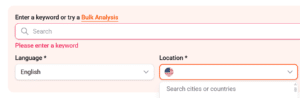
How do you find a keyword worth optimizing for?
A keyword worth building around has three qualities simultaneously.
- Real monthly search volume from real people actively typing it into Google.
- A keyword difficulty score that your blog can realistically compete for at its current authority level.
- And a search intent that matches the content format you are creating.
Here is a practical example. Assuming that you are a pet care blogger who wants to write about feeding cats. Targeting “cat food” has enormous volume, and the competition is dominated entirely by major pet brands and publications.


However, targeting “homemade cat food recipes for senior cats” has specific monthly demand, dramatically lower competition, and a reader whose exact situation the post addresses in the title alone. That specificity gets newer blogs to page one fast, because it gets the right ranking juice to compete for with its mate for page one.
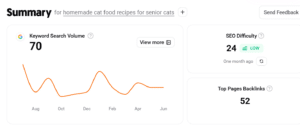
For freelance writers, choosing the right keyword for a client before writing that blog post is a deliverable in itself. Charge for it. Position it as a keyword strategy consultation and add it to every proposal you send.
Step 2 — Optimize your title tag and meta description before touching the body

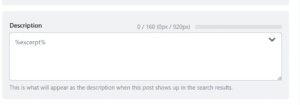
Your title tag and meta description are the only two elements every potential reader sees before deciding whether your content is worth their time. They are your post’s first impression in search results, and optimizing them is the fastest way to increase traffic from a post already ranking, without changing a word of the body copy.
What separates a clicked title from a skipped one?
Let me show you a direct before and after using a financial niche as an example:
Weak title tag: “Saving Money Tips and Advice for People With Financial Goals”
Strong title tag: “11 Saving Money Habits That Work Even on a Salary That Barely Covers Bills”
The weak version describes content. The strong version describes a person’s life. It speaks to the specific emotional reality of a reader who is not struggling abstractly with finances but concretely with a salary that disappears before the month ends. That emotional specificity is what earns the click over every competing result on the page.
Your focus keyword must appear as close to the front of the title as the headline naturally allows, and the entire title must stay within 60 characters so nothing gets truncated in search results.
How do you write a meta description that drives clicks?
One of the SEO things I learned the hard way is crafting a meta description that speaks. A strong meta description opens with the reader’s pain point, drops the focus keyword naturally in the middle, and closes with an urgency trigger that makes clicking feel like the obvious next move. It must stay within 155 characters and read as if a real person wrote it for another real person.
Step 3 — Structure your content so Google and readers both stay
Structure is where blog post optimization separates itself from basic content creation. A post with excellent writing but poor structure sends confused signals to Google and frustrates readers who cannot locate the specific answer they came looking for. Both outcomes damage rankings in ways most bloggers never trace back to their formatting decisions.
How should H2 and H3 tags work together for maximum SEO impact?
H2 tags cover the major dimensions of your topic. H3 tags support each H2 with specific targeted points. Every subheading should read like a real question someone might type into Google, because Google’s People Also Ask boxes are built entirely from real searches. Subheadings written in that format regularly win featured snippet placements that dramatically increase traffic without requiring any improvement in ranking position.
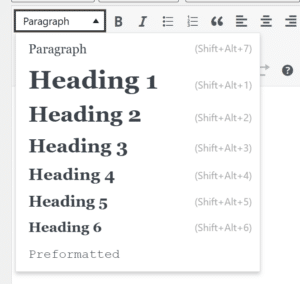
Therefore, follow this structural rule: never place two subheadings back-to-back without body copy between them. Two consecutive headings with no content between them tell Google the post was assembled carelessly, and they tell readers the writer padded the structure without delivering substance.
For freelance SEO writers, demonstrating a clear subheading strategy in a content sample is one of the fastest ways to differentiate yourself from writers who simply type and submit. Clients who understand SEO recognize it immediately and value it accordingly.
Step 4 — Place keywords strategically without killing your writing voice
Strategic keyword placement is one of the most commercially valuable skills in content optimization for SEO because it is the skill clients most often pay to outsource. Most business owners understand they need keywords in their content. Almost none of them know where those keywords carry the most weight or how to place them without making the writing sound like a directory listing.
Where exactly do keywords carry the most SEO weight?
Your focus keyword earns the strongest ranking signals in seven specific positions. The H1 title signals the post’s topic to Google’s crawler at the first point of contact. The first, second, or third sentence of the introduction, where Google looks immediately after the title for a relevance confirmation.
At least two or three H2 subheadings that reinforce the structural focus. Naturally, within body paragraphs, wherever the topic genuinely calls for it. The meta description, which draws the reader’s eye to your listing. Image alt text, which builds subtle relevance signals across every visual asset in the post. The conclusion, where it closes the content loop for both readers and search engines simultaneously.
A writer who can place keywords in all seven positions naturally and invisibly is a writer who can charge specifically for SEO writing rather than for general content writing. Venus Writingstyles Academy teaches you all these steps, by the way.
Step 5 — Optimize for readability because Google tracks how long readers stay
If you’re a beginner blogger or even an experienced writer who learned their craft before SEO became central to content performance, hear this: readability matters greatly when optimizing content for SEO. It is important that you remember not to treat it as a stylistic preference, but as a ranking mechanism.
What readability signals does Google measure indirectly?
As one who has written many blog posts for clients and for my brand, let me be upfront with you: Google does not score readability directly. However, it measures the behavioral consequences of poor readability. For example, high bounce rates where readers land and leave within seconds. Low dwell time, where readers never scroll past the introduction.
Low pages per session, where readers visit once and never return to the blog. All three tell Google the content failed to satisfy the search, and the ranking falls accordingly.
To solve that, you need to achieve short paragraphs of two to four sentences to prevent visual exhaustion. Conversational language to make complex ideas feel accessible rather than intimidating. Then, use clear transitions between sections to smoothly carry readers from one point to the next without requiring them to reorient after every paragraph.
It is a rule of thumb that a post that reads effortlessly keeps readers on the page, and readers who stay are the engagement signal that Google rewards with higher rankings and more traffic.
Step 6 — Build internal links that grow your entire blog’s authority
Internal linking is a content optimization for SEO strategy that gives every post a traffic advantage, extending far beyond its own keyword. Every internal link you add passes page authority from stronger posts to newer ones, keeps readers on your blog longer by giving them a natural next destination, and builds the topical authority signals that tell Google your blog covers its subject comprehensively rather than superficially.
For freelance writers managing client content, proposing an internal linking strategy as part of every content delivery is an upsell opportunity. A client whose blog has 50 posts and no internal linking strategy among them has a significant revenue opportunity sitting untouched in their existing content library. Identifying that gap and offering to fix it is a service worth hundreds of dollars that requires no new content creation whatsoever.
How many internal links does a blog post need?
Add at least two internal links to related posts within the body of every new post you publish. Immediately after publishing, go back to two or three existing posts on related topics and add outbound links pointing to the new post. That two-way linking creates an authority network that grows stronger and more commercially valuable with every post added.
Step 7 — Optimize every image so your page loads fast and ranks higher
Lack of image optimization consistently damages rankings in ways most bloggers never connect back to their images. Three things must happen with every image before a post goes live.
Compress the file using a free tool like TinyPNG. Large uncompressed images slow page loading speed, and page speed is a confirmed Google ranking factor that affects every single page on a blog simultaneously. Rename the image file descriptively before uploading it.
A file named after the content topic sends Google a clear relevance signal. A file named “screenshot47.jpg” sends nothing. Write descriptive alt text using a natural variation of your focus keyword where it fits genuinely. Alt text is what search engines read when processing images, and it is a quiet but consistent SEO signal accumulating value across every post on a blog over time.
Step 8 — Refresh old posts to recover traffic and impress clients with fast results
This is the content optimization for SEO tip that delivers the fastest, most measurable results for blogs with existing content, and it is the most powerful commercial offering a freelance writer can bring to any client conversation.
Every post on a blog is slowly losing traffic right now. Not because of poor writing, but because search landscapes shift, competitors publish stronger posts, statistics go out of date, and Google continuously reassesses which content best serves each keyword. A post that ranked on page one eighteen months ago may be sitting on page two today, losing hundreds of clicks monthly that a strategic update could recover within weeks.
How do you identify which posts are worth updating?
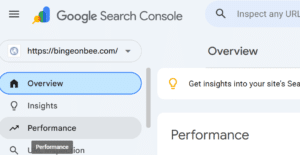
Do this immediately as you read; open your Google Search Console and navigate to the Performance report. Filter by average position and look for posts sitting between positions 8 and 20. These posts are already indexed, already earning impressions, and already trusted enough by Google to appear in search results. They are sitting just outside page one because they are slightly under-optimized for the current competitive landscape.
Those are the highest-return optimization opportunities on any blog. A post moved from position 14 to position 4 through a strategic content refresh delivers more new traffic than five brand new posts starting from zero. Update the statistics, expand thin sections, strengthen the title tag, refresh the meta description, add two new internal links, resubmit the URL to Google Search Console, and track performance over the following four to six weeks.
For freelance writers, this is a complete done-for-you service that clients with established blogs will pay significant monthly retainer fees to access consistently. It requires no new content creation, delivers fast visible results, and builds the kind of ongoing client relationship that produces stable monthly income rather than the feast-and-famine cycle most freelancers experience.
How content optimization becomes your most valuable commercial skill
As a general content writer, you are competing in the most crowded part of the market: basic content creation at commodity rates. The writers commanding three hundred to five hundred dollars per article and retainer clients paying two thousand dollars monthly are not in that market. They are in the results market, and content optimization for SEO is the primary skill that puts any writer there, regardless of their niche, experience level, or location.
As someone who is in the system, take this from me. A client paying for content is paying for one of three outcomes: traffic, leads, or sales. Every optimization skill covered in this post directly serves at least one of those outcomes.
A writer who can articulate that connection in a proposal, demonstrate it in a content sample, and deliver it consistently in published work is no longer competing on price. They are competing on value, and value is a race with a very different finish line.
The writers thriving in Nigeria, in the USA, and across global content markets right now are not the ones with the most creative writing portfolios. They are the ones whose clients can open Google Analytics, look at their traffic graph, and point to the exact month they started working with that writer.
Learn to optimize content for SEO with the consistency and commercial awareness this post has given you today, and you will never again compete for low-rate writing work or wonder why your own blog posts sit silently on page four while lesser content ranks above them.